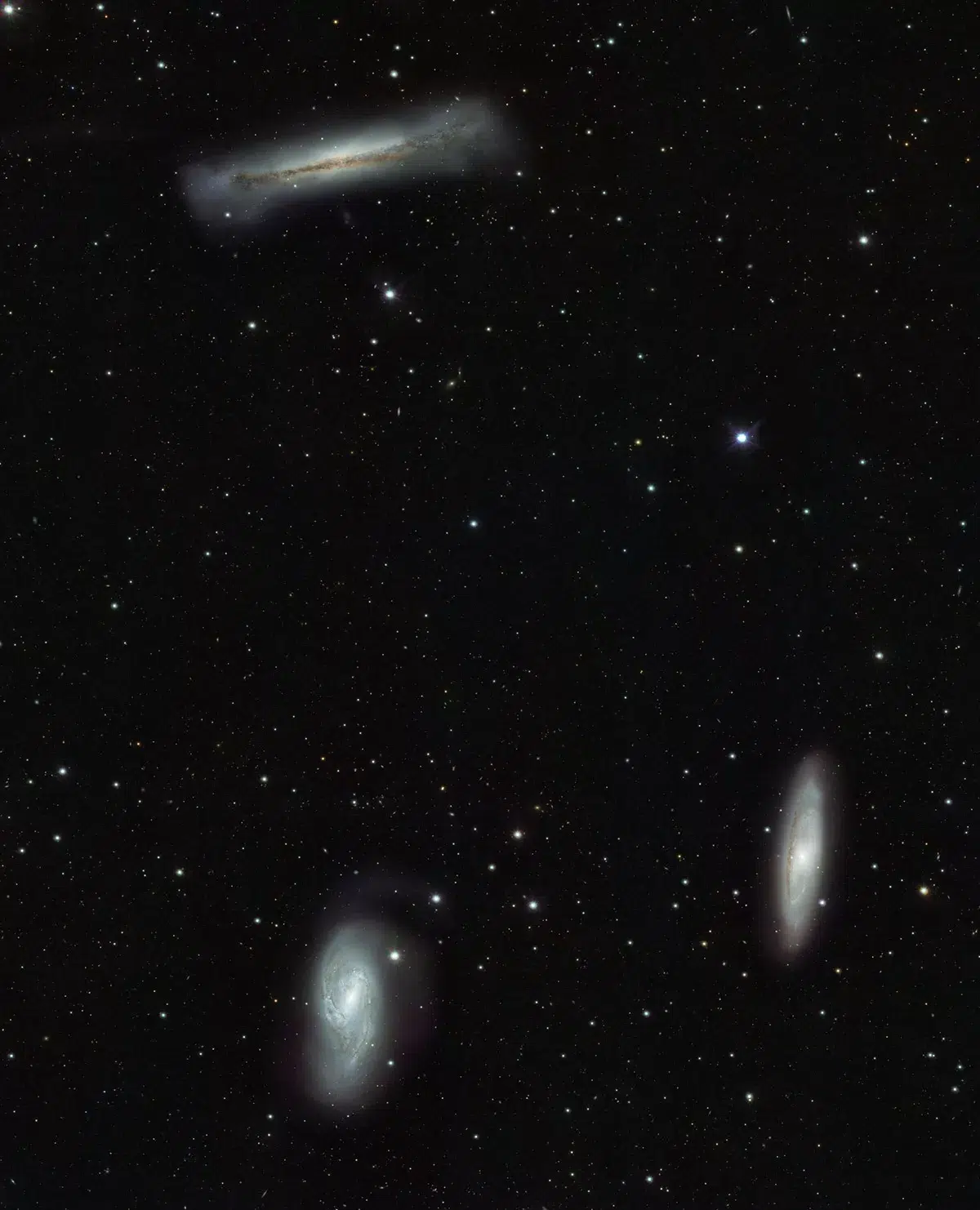
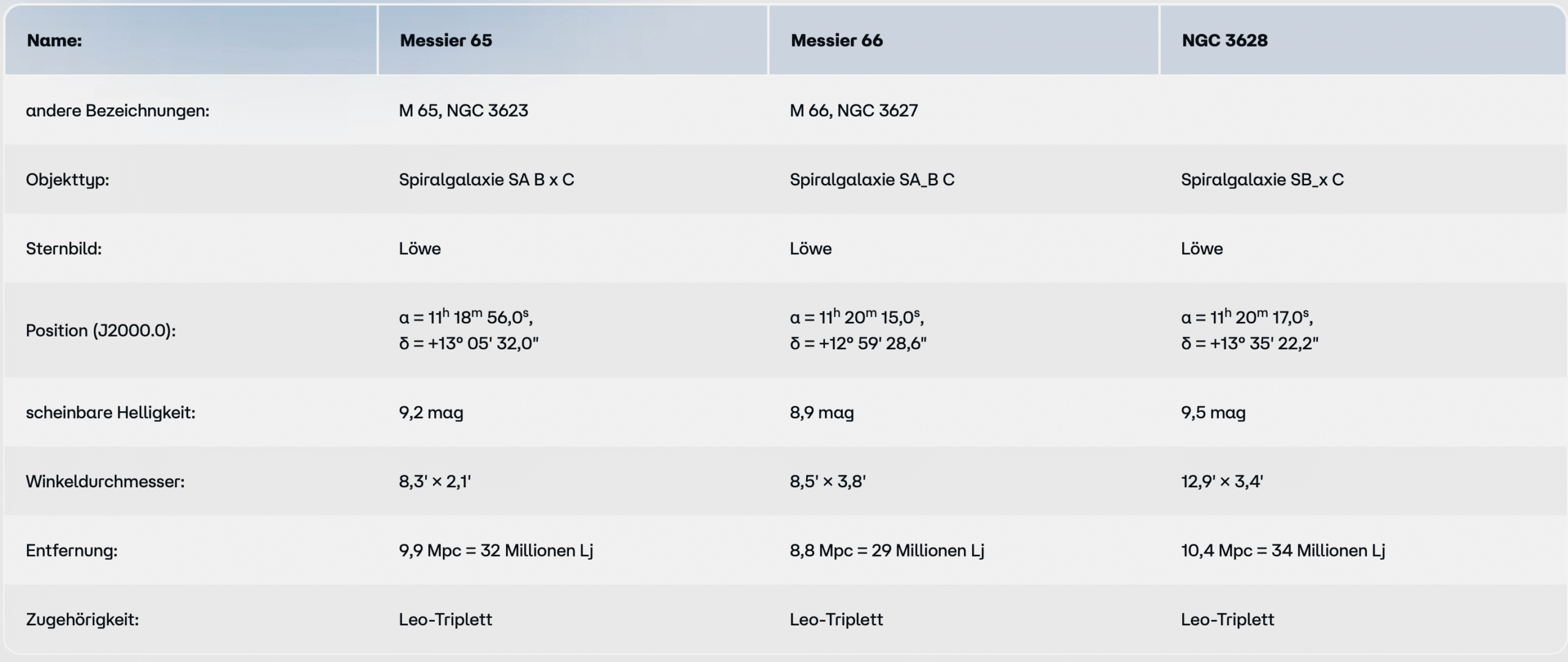
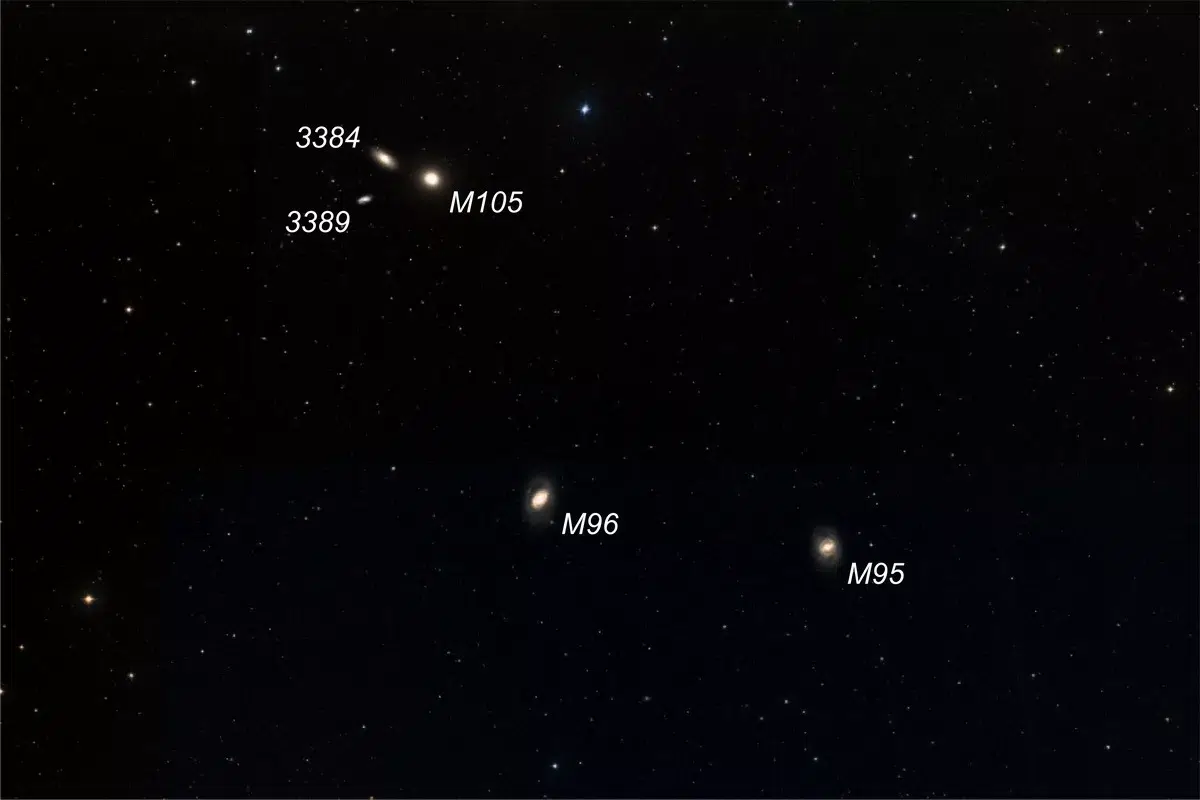
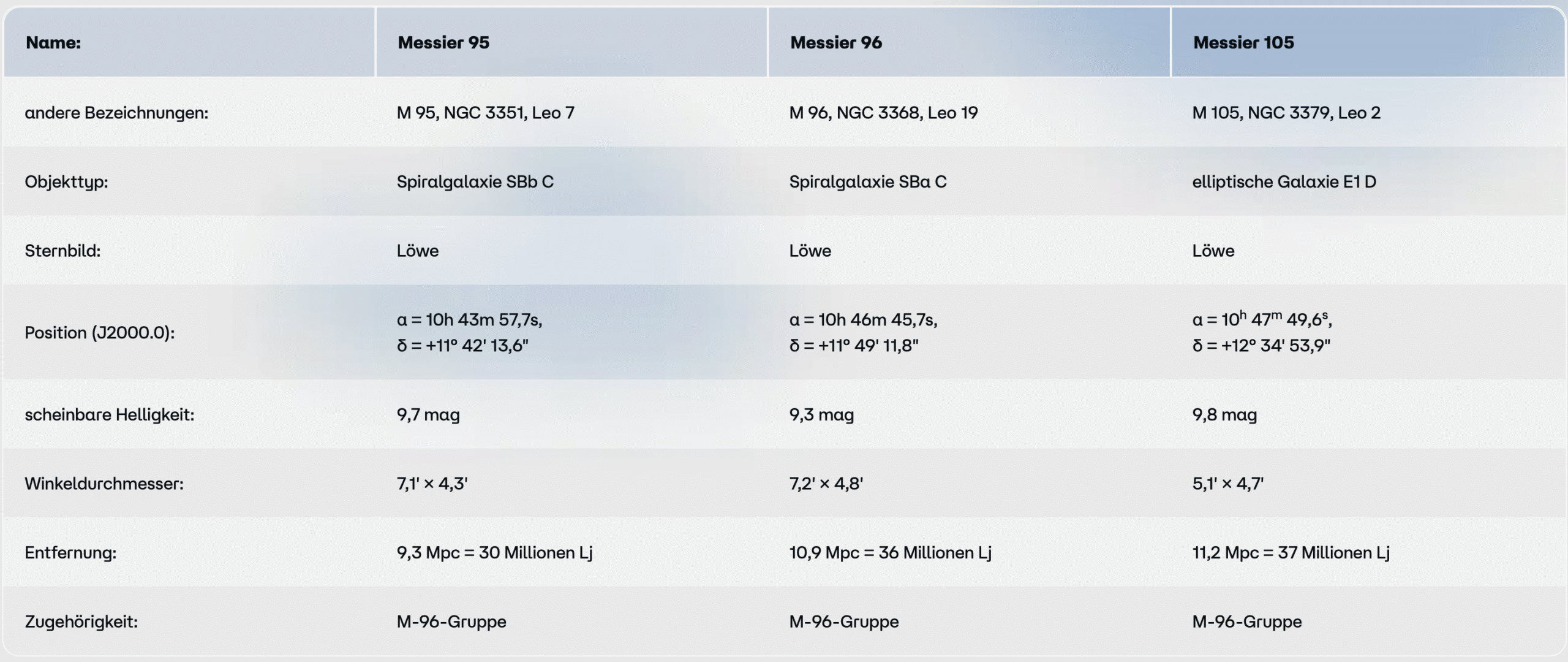
A small telescope reveals, slightly west of the Leo Triplet, the group consisting of M 95, M 96, M 105, and several additional galaxies. This collection is named the M 96 Group, after its brightest member. Together with the Leo Triplet, this galaxy group belongs to the Virgo Supercluster, which also includes the Local Group and our own Milky Way Galaxy.
The brightest members of the M 96 Galaxy Group, located about 35 million light-years from Earth, are the Messier objects M 96, M 95, and M 105. NGC 3384 is also part of the group, whereas the galaxy NGC 3389, which is also visible in the image, lies much farther in the background at a distance of roughly 57 million light-years. An interactive version of this image can be found in the Aladin Sky Atlas. (Image: DSS colored, Digitized Sky Survey, STScI/NASA, colored & HEALPix-processed by CDS, via Aladin Sky Atlas; labeling: Uwe Reichert)