

Satellite Tracking: Protecting the Orbital Economy
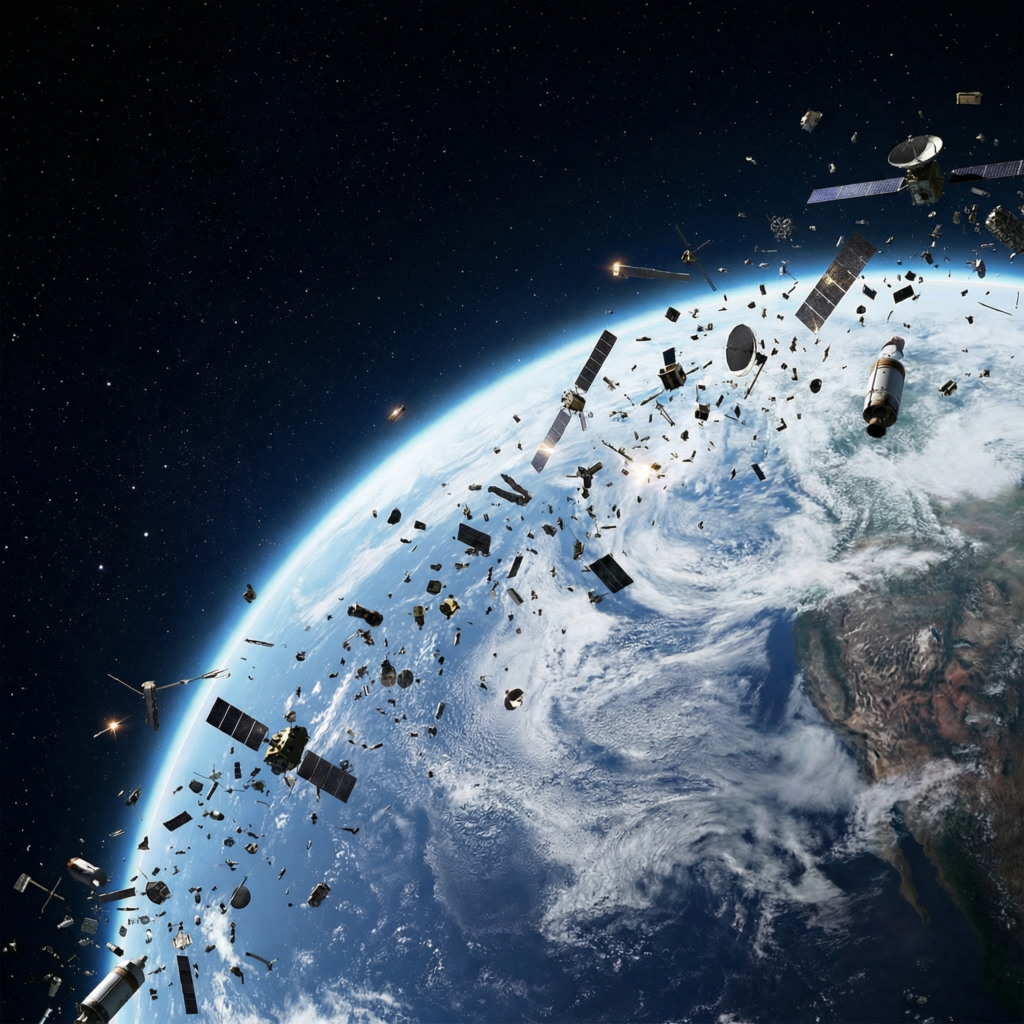
October 4, 1957, marked more than just the beginning of the “Space Race” with the launch of Sputnik 1. Rather, that day represented a fundamental turning point for human civilization. What began as a technological power struggle during the Cold War has undergone a massive transformation nearly seven decades later. Today, it has evolved into […]
Deep Sky Astrophotography (Part 2): In Edwin Hubble’s footsteps, stars and nebulae in other galaxies

A little over 100 years ago, Edwin Hubble ended a long and controversial discussion among ex-perts that went down in history as the “Great Debate” and opened the door to cosmology by answering “yes” to the following question: Are some of the nebulous astronomical objects not gas clouds in our own Milky Way, but independent […]
Deep Sky Astrophotography (Part 1): Following in the Footsteps of Hubble and Co?

In a previous article (Outsmarting Earth’s Atmosphere), we have already described how (and why) small telescopes and the lucky imaging method can be used today to obtain extremely sharp images of the moon, planets, and some brighter deep sky objects that were not even possible with large telescopes a few decades ago. But what about […]
Outsmarting Earth’s Atmosphere (Part 2) – How Lucky Imaging Works

Lucky Imaging makes it possible to take sharp images of the sun, moon, planets, and double stars even with small telescopes, which was impossible just a few decades ago even with the best and largest telescopes in the world. And in some cases, the technique can also be used, at least in a slightly reduced […]
Outsmarting Earth’s Atmosphere (Part 1) – Ultra-Sharp Images with the Lucky Imaging Technique

Nowadays, the best astronomical telescopes – whether large or small – are equipped to near perfection in terms of their optics, mechanics, and electronic controls. As long as there are no technical shortcomings, the way should be clear to exploit the maximum possible performance of a telescope. Unfortunately, however, there are several “enemies” that can […]
Software-based telescope control in the Planetarium Halle

A New Era for Stargazing: The Halle Planetarium The new planetarium housed in the former gasometer is one of the most advanced in Europe.Inside the circular dome hall — 12 meters in diameter and offering space for over 100 guests — visitors can immerse themselves in breathtaking 360° projections of celestial phenomena. Thanks to state-of-the-art […]